




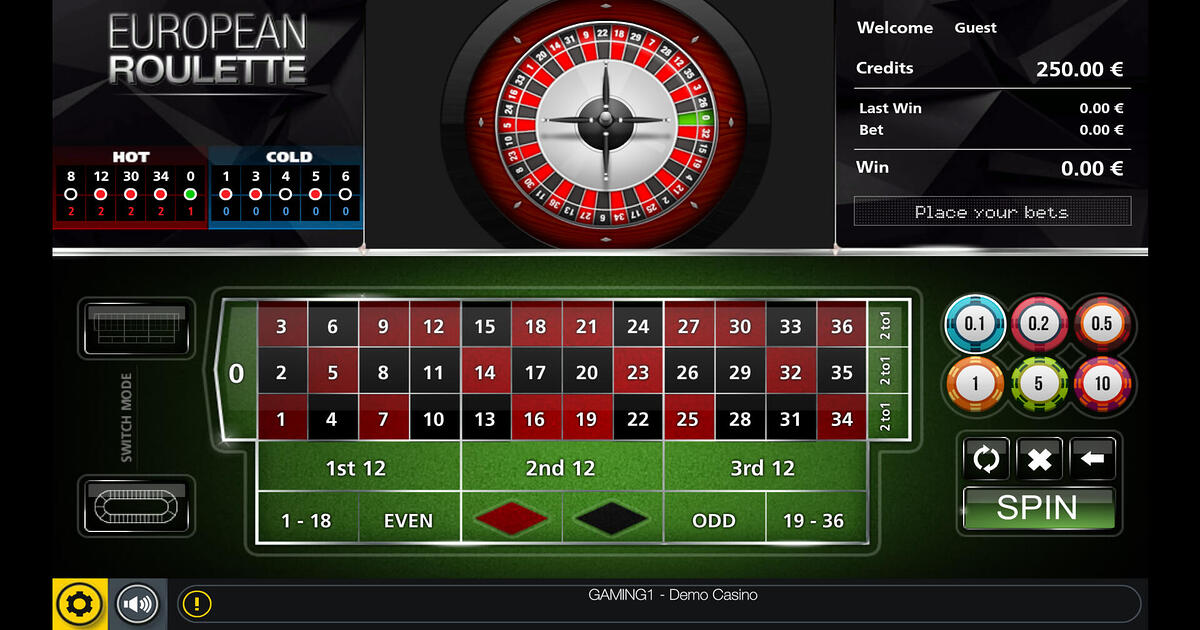
European Roulette slot games mix reel spins with roulette-style bonuses, but the maths behind them shapes every session. We analyze RTP, volatility, bonus mechanics and bet structures to provide a clear picture of long-term win rates. We’re not offering systems, just the concrete data that generates results.
The Role of Wild Symbols and Their Multiplier Impacts
Wild symbols substitute for all regular paying symbols, aiding in completing or upgrade winning lines. Standard wilds commonly land on reels two, three and four, though some games include them on all five reels. A single wild can convert a near-miss into a full payline, and multiple wilds in one spin can generate surprisingly large base-game hits before any bonus triggers.
Multiplier wilds are a common twist. A wild carrying a 2x or 3x multiplier doubles or triples any win it participates in. If two multiplier wilds are part of the same line, their values typically multiply creating 4x, 6x or even 9x boosts. Stacked multiplier wilds during free spins can drive a single line win past 100x the total bet, dramatically shifting session win rate in one spin.
Expanding wilds that cover entire reels also occur, often associated with a specific reel or triggered randomly. A full reel of wilds ensures multiple winning combinations across all active paylines. These features are rare in the base game, typically firing once every 300 to 500 spins, but they are a major contributor to the game’s overall return. Tracking how often you see expanding wilds gives a practical feel for whether the slot is running hot or cold.
Reel Configurations and Payline Structures
European Roulette slots almost always use a five-reel, three-row grid, but four-row variants appear in modern releases. The standard 5×3 setup builds winning combinations from left to right on fixed paylines, generally 20 to 25. Every line is active on every spin, so your total stake is the line bet times the fixed line count.
Some developers swap out traditional paylines with a 243-ways-to-win mechanic. Matching symbols on adjacent reels from leftmost to right pay out regardless of exact position. This frequently increases hit frequency slightly, but symbol payouts are typically lower to compensate, keeping overall RTP within the same range.
The paytable features roulette-themed icons: chips, wheels, croupier figures and playing card suits. The top-paying symbol frequently awards between 10x and 25x your total bet for five on a payline. That might appear modest, but the real value sits in bonus features. Understanding base-game symbol values aids you gauge how much RTP is loaded into feature rounds versus regular spins.
Risk level and Hit Frequency: How They Affect for Your Funds
Variance describes how a slot allocates payouts. High-risk games provide fewer wins but larger prizes when they land. Low-volatility versions hold you in the game with frequent small hits, though top-end potential is capped. full checklist Most roulette-themed slots lean medium-to-high because bonus rounds reflect the tension of a spinning wheel.
Hit frequency represents the percentage of spins that produce any win, even if it’s below your stake. In this genre we typically see hit rates between 22% and 28%, meaning roughly one in four spins pays something back. Those small returns hardly ever cover the spin cost. Real money comes from premium symbols or the roulette bonus feature, which may trigger only once every 150 to 200 spins on average.
We align volatility to our session budget. With £50 and an hour of entertainment, a high-volatility game could exhaust us in ten minutes without a feature. A lower-volatility title extends the bankroll but demands patience. Checking the paytable for the gap between highest and lowest symbol payouts gives a rough volatility clue: a 50x difference between five-of-a-kind premiums and low-tier symbols usually signals higher variance.
Wager Spectrum and Top Prize Cap
The stake range on a European Roulette slot commonly starts at £0.20 or £0.25 per spin and goes up to £100 or £200, catering to both casual players and big spenders. Because paylines are fixed, the total wager is simply the chosen coin value multiplied by the line count. We advise starting at the lower end while you learn the bonus cycles, then increasing only when you’re comfortable with the variance pattern you’re seeing.
Maximum win caps directly impact player win rate expectations. Most titles in this category list a max win of 5,000x to 10,000x your stake. A 5,000x cap on a £1 spin means the absolute maximum is £5,000, no matter how many multipliers stack. Some progressive jackpot editions push this figure higher, but fixed-limit games are far more common. Always confirm the cap in the game rules, because achieving it is statistically speaking a once-in-many-million-spins occurrence.
The inclusion of a max win cap also affects optimal bet sizing. If you’re pursuing the top prize, wagering £0.20 yields a maximum payout of £1,000 at 5,000x, while £2 per spin lifts that to £10,000. The RTP remains constant, but the monetary value of the ceiling scales with your stake. We never raise our wager going after a cap, but we do consider it in our session goals. Understanding the ceiling keeps expectations in check.
Scatter Signs and the Complimentary Spins Feature
Scatter icons are the gateway to the most profitable part of any European Roulette slot. Getting three, four or five scatters on any reel on the reels awards a predetermined number of free spins, typically 10, 15 or 20. Scatter symbols don’t need to align on a payline, keeping the feature trigger feel more reachable. The typical wait between scatter triggers is around 120 to 180 spins, however extreme variance can extend that to 300 or more.
During free spins, at least one improvement is present. The most common is a win multiplier that works to every payout, commencing at 2x and sometimes rising higher with retriggers. Other games include extra wilds, eliminate low-paying symbols or bring in a special roulette wheel that rotates before each free game to award an additional multiplier. These complex mechanics can transform a modest 10-spin feature into a bankroll-defining event.
Retriggering the free spins is usually possible by hitting three more scatters during the feature. Some slots cap retriggers at a maximum number, such as 50 or 100 total free spins, while others allow unlimited retriggers. We always review the rules because unlimited retriggers with an rising multiplier generate the conceptual possibility of enormous wins, even if the chance is extremely small. That capacity factors directly into the slot’s maximum win ceiling.
Understanding the House Edge in European Roulette Slots
RTP (RTP) is the first number to examine. Most titles range between 95% and 97%, giving a house edge of 3% to 5%. That’s larger than the 2.70% edge on single-zero table roulette because slot maths must support bonus features and jackpot pools. We always locate the theoretical RTP in the game rules or paytable.
A 96% RTP does not indicate you get back £96 for every £100 wagered in a short session. It’s a statistical average over millions of spins. Your individual win rate can swing far above or below that figure depending on when free spins trigger or a high-value combination hits. The house edge is a slow grind, not a per-spin deduction.
Some European Roulette slots offer adjustable RTP settings, where the operator chooses between, say, 94% and 96%. Review the help file for a stated RTP range; if it’s missing, assume the lower end. A two-percentage-point gap shifts expected losses from £400 to £600 over 10,000 spins at £1 per spin. That’s real money.
Roulette Wheel Bonus Features and Instant Win Mechanics
Numerous European Roulette slots contain a specific roulette wheel bonus, apart from the free spins. It’s typically triggered by landing bonus symbols on particular reels or gathering tokens over various spins. Once initiated, a roulette wheel shows up on screen, segmented into segments that give instant cash prizes, multipliers on the total bet, entry to a second-tier wheel or additional free spins. The wheel spin is visualized, but the outcome is decided by a random number generator the instant the feature starts.
The prize segments on the wheel are weighted. Larger cash values and higher multipliers occupy fewer segments, while smaller prizes cover the majority. We’ve examined paytables where the top wheel prize is 500x the triggering bet, but the probability of landing on that segment is below 1%. Understanding this weighting avoids the illusion of equal odds. The average payout from a wheel bonus typically falls between 15x and 40x the bet.
Some titles incorporate multiple wheels, where the first spin dictates which of several wheels you advance to. A bronze, silver and gold system is typical, with the gold wheel containing the richest prizes. The expected value of the bonus round is baked into the overall RTP, so a flashy wheel doesn’t change the house edge. It simply shifts a portion of the return into a concentrated, high-excitement moment that can significantly swing your session win rate.
How to Enjoy European Roulette Slot: A Detailed Walkthrough
Opening the game for the initial time, we always review the paytable and rules screens before betting a single penny. The paytable shows symbol values, payline patterns and bonus trigger conditions. The rules page confirms RTP, volatility indicators if included, and any caps on free spins or win amounts. Taking two minutes here avoids confusion later when a scatter lands and you’re unsure what it does.
Setting your bet is the next step. Use the on-screen arrows or a bet selector to modify the total stake per spin. Because paylines are fixed, you’re only selecting the coin value. We determine a session budget and break it into at least 100 spins to give the game room to breathe. If our budget is £40, a £0.40 spin size provides us 100 spins, a fair window to see a bonus round or two.
Pressing the spin button activates the reels. Most games also provide an autoplay function where you can preset a number of spins and optional loss or win limits. We use autoplay with a loss limit set at our session budget and a single-win stop if we reach a target. This takes away the temptation to chase losses manually. During free spins or bonus rounds, the game often pauses autoplay and demands manual interaction, which is a good moment to reevaluate your position.
After each session, we review what happened. Did the bonus trigger within the expected range? Were base-game wins maintaining the balance stable or depleting it fast? This reflective habit turns raw play into useful data. Over time, you create a personal feel for the slot’s rhythm, and that helps you decide whether to continue, switch stakes or walk away. No system defeats the maths, but disciplined observation improves your decision-making.
Analysing Player Win Rate: Extended Projections and Session Management
Player win rate isn’t just a single number; it’s a distribution of possible outcomes determined by RTP, volatility and bonus frequency. Over 1,000 spins, a 96% RTP slot can easily return anywhere from 50% to 150% of your total wager, purely due to variance. We acknowledge that short-term results are noisy and zero in on the metrics that repeat over thousands of spins. The house edge ensures a long-term loss, but how that loss unfolds is what we handle.
Bonus features provide a substantial share of the overall RTP, often 30% to 40%. That means if you never trigger a feature in a session, your effective return can drop into the 60% to 70% range. Conversely, an early feature with a big multiplier can push your session return above 200% and keep it there. We track feature frequency mentally; if we go 250 spins without a scatter trigger, the slot is operating at the unlucky end of its variance curve, and it may be wise to reduce stakes or switch games.
Money management is the real-world expression of win rate analysis. We define a hard stop-loss at 50% of our session budget and a take-profit target at 150% of the starting balance. When one is hit, we conclude the session. This strategy doesn’t change the RTP, but it protects us from the harmful tail of the distribution where losses accumulate. Over many sessions, this method evens the experience and maintains the game enjoyable rather than financially stressful.
We tell ourselves that every spin is separate. Past results don’t impact future outcomes. A slot that hasn’t paid a bonus in 300 spins isn’t “due”; it’s simply displaying the cold side of its programmed variance. Understanding this theoretically is easy; feeling it in the moment is hard. That’s why we depend on pre-set limits and session rules, not gut instinct, to regulate our play. The maths is the only reliable guide.
Frequently Asked Questions
What is the typical RTP of a European Roulette slot?
Most European Roulette slots feature an RTP between 95% and 97%, which is less than the 97.30% of single-zero table roulette. The exact figure is always shown in the game’s information or paytable section. We suggest checking this before you play, as some operators may offer the same title at different RTP settings.
Does a betting system help increase my win rate?
No staking plan can alter the house edge or the slot’s defined RTP. Progressive staking methods like the Martingale simply change the pattern of wins and losses, not the underlying math. Over a big sample, your results will converge on the theoretical return, no matter how you change your stake between spins.
How frequently do the free spins occur?
Free spins commonly occur once every 120 to 180 spins on average, but the actual interval can fluctuate greatly. Some sessions may experience two rounds within 50 spins, while others go beyond 300 without a scatter appearing. The occurrence rate for the scatter is typically stated in the game instructions, providing you a more accurate idea.
What’s the top win on a European Roulette game?
Top win ceilings usually fall from 5,000x to 10,000x your total bet per spin. A few slots offer higher ceilings through progressive jackpots or unlimited retrigger systems. The limit is always specified in the game’s guidelines, and reaching it is an exceptionally rare statistical outcome.
Does the wheel bonus use fair odds?
The roulette bonus wheel is powered by a RNG, and the sections are biased. Larger prizes fill fewer segments, so the wheel isn’t a game of equal probability. The average payout of the bonus round is factored into the overall RTP, guaranteeing the game stays fair in aggregate even if single wheel spins feel uneven.
